
Speed Optimization and Website Cleanup for Oregon Restoration
How a WordPress speed optimization helped a local service website reduce mobile LCP by 69%, eliminate mobile blocking time, and improve performance score to 94.
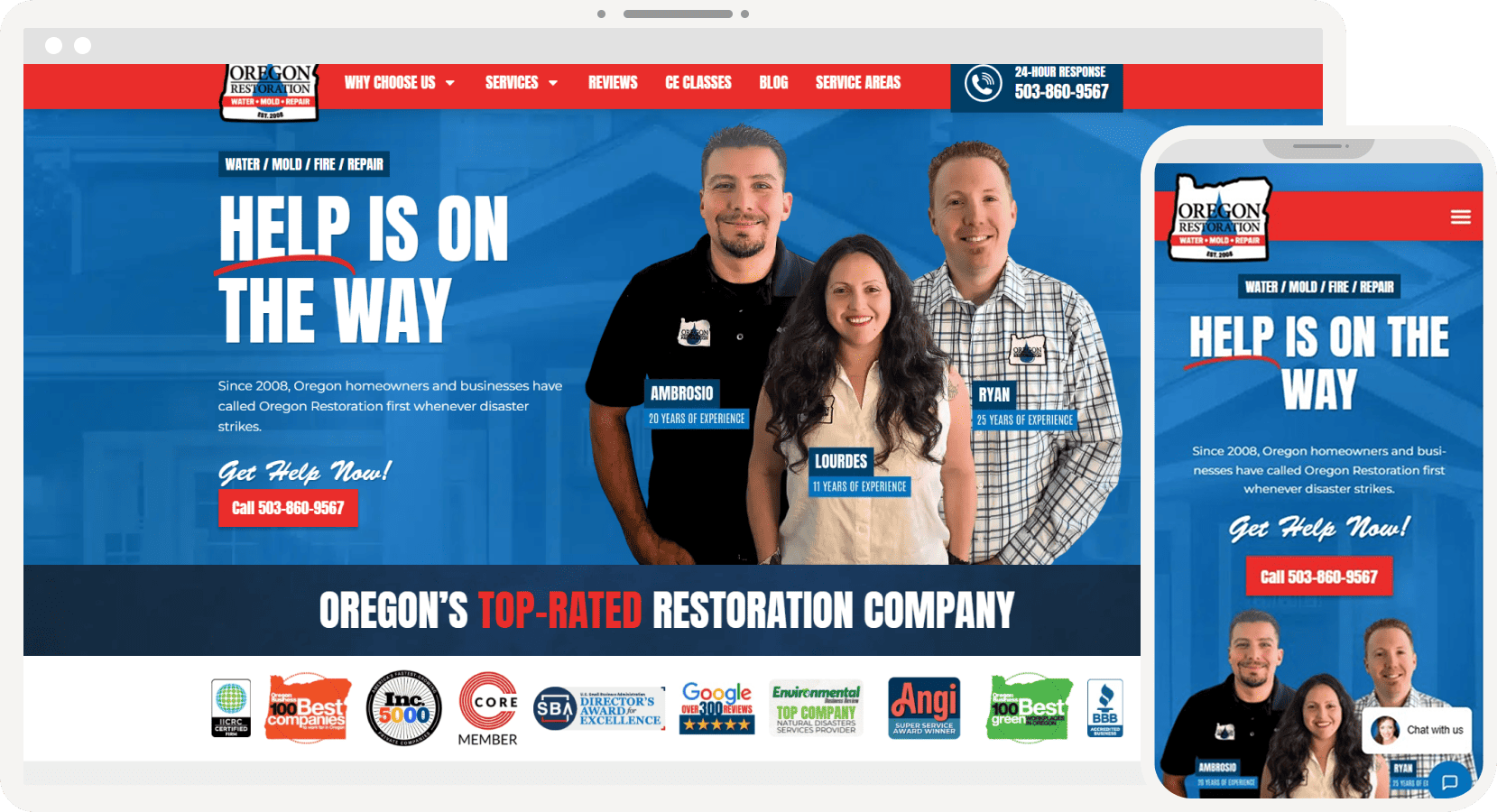
Overview
Oregon Restoration relies on its website to support local visibility and lead generation. Because many local service searches happen on mobile, the website needed to load faster and provide a better experience for visitors who were looking for restoration services quickly.
Before optimization, slow mobile loading created friction for potential customers and could affect both user engagement and local search performance. The project focused on improving mobile page speed, Core Web Vitals, and usability so visitors could access the site faster and take action with less delay.
Key Challenges
Slow Mobile Loading
The main visible content was taking too long to load on mobile. This created a poor first impression for visitors who needed restoration services quickly.
High Mobile LCP
Mobile LCP was 12.1 seconds before optimization. That meant the largest visible content element was delayed, making the page feel very slow.
Delayed Visual Loading
Mobile Speed Index was 8.0 seconds before optimization. Visitors had to wait too long before the page looked visually ready.
Low Mobile Performance Score
The mobile performance score was 77 before optimization. This showed that the site had speed and loading issues that needed to be improved for a smoother mobile experience.
Goals and Objectives
The goals were to improve the mobile performance score, reduce mobile LCP below 4 seconds, eliminate mobile Total Blocking Time, and improve mobile Speed Index below 4 seconds. The work also focused on making the site faster, cleaner, and easier to use for local visitors on mobile.
Key Results
69%
Mobile LCP Reduction
Mobile LCP dropped from 12.1s to 3.8s.
55%
Mobile SI Improvement
Mobile Speed Index(SI) improved from 8.0s to 3.6s.
94
Performance Score
Increase performance score from 77 to 94.
Client Feedback
Ben Worsley
Marketing Manager, Oregon Restoration
Our website now feels much faster on mobile, and the improvements made it easier for visitors to access our services without waiting through slow page loads. The process was clear, practical, and focused on the website issues that mattered most for leads and user experience.
Solutions and Process
Website Health Review
The site was reviewed across performance, mobile experience, technical SEO, security, and WordPress setup. This helped identify the issues most likely to affect visitors, leads, and long-term website stability.
Backup and Safety Checks
Backup access, restore options, update risks, and security basics were checked before making changes. This reduced the chance of creating new issues while improving the site.
WordPress Cleanup and Updates
WordPress core, plugins, themes, admin warnings, and visible site issues were reviewed and cleaned up. The goal was to make the site easier to maintain and less likely to break from neglected updates.
Performance and SEO Improvements
Images, caching, scripts, page speed, broken URLs, metadata, and crawl signals were reviewed or improved. These changes helped support faster loading, cleaner search engine access, and a better visitor experience.
Validation and Monitoring
Improvements were checked using performance tools, crawl checks, uptime monitoring, and reporting. This confirmed what changed and showed what still needed attention next.
Key takeaways
Local service websites need fast mobile performance because many visitors are searching from their phones. When a website loads slowly, potential customers may leave before they call, fill out a form, or request a quote.
WordPress speed issues are rarely caused by only one problem. Images, caching, scripts, hosting, plugin bloat, and technical SEO issues can all contribute to a slower experience.
For Oregon Restoration, the biggest win was improving mobile performance where it mattered most. The site became faster, easier to use, and better prepared to support local visitors looking for restoration services.